Seagulls
The EmigrantsSeagulls appear at a moment when the emigrants’ sea passage has brought them close to death, and their return gives the ocean a visible sign of life. The birds matter not as developed characters but as creatures whose presence and cries enter the passengers’ experience of distance, danger, and mourning.
Return During the Burial
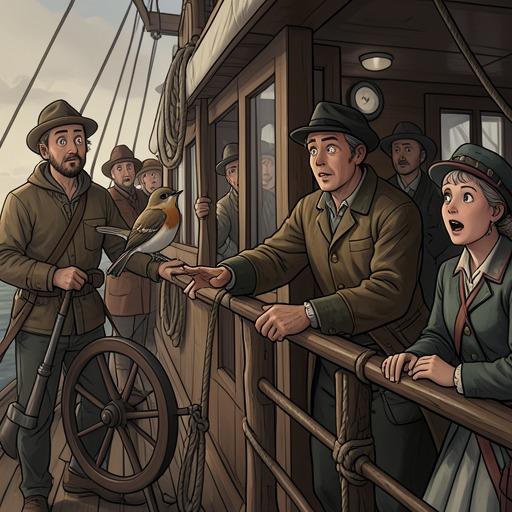
At Inga-Lena’s sea burial, the seagulls have returned in large flocks and swarm through the rigging. The sight marks a change in the scene: after the prayer and the ship’s subdued passage through the water, life is again visible on the sea. The birds’ movement above the ship contrasts with the still body prepared for burial and the ritual that will commit it to the water.
The burial joins the emigrants’ Swedish home to the ocean through three shovelfuls of earth. As Captain Lorentz scatters the soil over the canvas-covered body, grains slip from the small mounds and fall over the rail. Against this downward movement of the homeland’s earth, the gulls fill the rigging with returning life. Their presence does not undo the loss, but it changes the surrounding image of the sea from an empty expanse into a place inhabited once more.
The Child’s Cry and the Birds
When the captain speaks of the Day of Judgment, a cry rises from the mourners. At first it seems to come from a sea bird, and some of the people look toward the rigging, as if a gull has broken into the solemnity of the funeral. The sound is revealed instead as a child’s cry. This brief mistake binds human grief to the birds’ calls without making them identical: the mourners interpret an uncertain sound through the landscape of sea, rigging, and gulls around them.
The moment sharpens the tension between ritual consolation and the rawness of loss. The funeral words promise resurrection, but the cry is described as eerie and hopeless rather than hopeful. The gulls provide the apparent source of that sound, then recede when its human source becomes clear. Their role is thus fleeting but structurally important: the scene makes the boundary between the living world and the bereaved passengers momentarily uncertain.
Narrative Significance
The birds’ return follows a period in which the sea has been associated with danger and death. Their appearance gives the burial scene a counter-image to the canvas-wrapped body and the Swedish soil slipping into the water, yet offers no guarantee that suffering has ended. The passage holds renewal and bereavement together: life is again visible, but a passenger has died far from the land where she lived.
Seagulls also function as part of the emigrants’ precarious perception of the ocean. A sound overhead can be taken for a bird; the birds themselves make life perceptible in a setting where people have faced illness, storm, and burial at sea. Their presence supplies neither an explanation of death nor a divine answer. Instead, it gives the funeral a living, natural surround against which the emigrants’ loss—and their continued passage—becomes more sharply felt.